Article: Inside LESCENTO: Why We Produce Fragrance in Small Batches
Inside LESCENTO: Why We Produce Fragrance in Small Batches
In an industry where fragrance can be produced by the tens of thousands of bottles at a time, LESCENTO has chosen a different path.
We produce our fragrances in small batches, not because it is the easiest or fastest way to make perfume, but because it gives us greater control over something that matters deeply to us: the fragrance inside the bottle.
For LESCENTO, small-batch production is part of the craft. It allows us to work deliberately, pay close attention to each composition, give every batch the time it needs, and preserve the character that made us create the fragrance in the first place.
We are not interested in making fragrance as quickly as possible. We are interested in making it properly.
What Does Small-Batch Perfumery Actually Mean?
Small-batch production means that instead of preparing enormous quantities of fragrance at once, we work with more limited production runs.
There is a practical difference.
A fragrance formula may look precise on paper, but perfume is ultimately a physical composition made from many different materials. Essential oils, absolutes, resins and aroma molecules each bring their own characteristics to the formula.
Producing in smaller quantities allows us to remain much closer to that process.
We can evaluate the fragrance as it develops, observe the batch during maturation and maintain greater oversight from the initial blending of materials through to filtration, filling and the finished bottle.
It is a slower and more involved approach, but that involvement is exactly the point.
Craftsmanship Begins With the Formula
Before there is a bottle, a label or a name, there is a formula.
A perfume is constructed through proportion.
A small amount of one material can illuminate another. A fraction too much can change the direction of an entire composition. Something bright may need something darker beneath it. A powerful material may need softness around it. Sweetness often becomes more interesting when contrasted with woods, spice, earthiness or bitterness.
This balance is where much of perfumery lives.
At LESCENTO, our fragrances are built with a combination of natural materials and carefully selected aroma molecules.
Depending on the composition, this may include essential oils, absolutes, woods, resins, florals, spices, citrus materials, musks, amber materials and modern perfumery molecules.
We do not believe that fine fragrance needs to choose between nature and modern perfumery.
Both have a purpose.
Natural Materials Bring Character
There is something extraordinary about working with materials derived from plants.
Bergamot can be sparkling, bitter, green and almost floral. Patchouli can move from earthy and damp to woody, smooth and sophisticated. Rose can be lush, spicy, fresh or dark. Vetiver can feel grassy, smoky, dry or mineral. Cardamom can be green and aromatic or warm, creamy and almost gourmand.
Even within the same botanical material, origin, extraction and natural variation can influence its olfactory character.
This is one reason natural materials can bring such personality to a composition.
LESCENTO uses natural materials, including predominantly organic essential oils and absolutes where appropriate, alongside modern perfumery ingredients.
The objective is not to use a natural ingredient simply so that we can say it is there. It has to contribute something meaningful to the composition.
Every material needs a reason to exist.
Modern Aroma Molecules Bring Precision
Modern perfumery would be extraordinarily limited without aroma molecules.
They allow a perfumer to create effects that nature alone cannot always provide: diffusion, radiance, transparency, texture, persistence and abstraction.
They can make woods feel smoother. Florals can become more luminous. Amber can become more expansive. Musks can create softness and intimacy. Certain molecules can give a fragrance an almost tactile quality, making it feel airy, creamy, dry, velvety or warm.
This is why LESCENTO combines natural ingredients with clean, carefully selected aroma materials from established fragrance suppliers and materials conforming to applicable IFRA standards.
It is not a compromise between natural and synthetic.
It is modern perfumery.
The artistry lies in understanding what each material contributes and determining how much of it belongs in the composition.
Ingredients Are Only the Beginning
Reading a list of fragrance notes tells you surprisingly little about how a perfume will actually smell.
Two fragrances can contain bergamot, jasmine, sandalwood, vanilla and musk and smell completely different.
Why?
Because perfumery is about much more than the presence of individual ingredients.
It is about proportion, quality, contrast, interaction and structure.
Consider vanilla.
Vanilla can make a fragrance obviously sweet, but it can also be used very differently. In the right proportion, it can soften woods, round an amber accord, temper a spice, add warmth to florals or create an almost imperceptible creaminess.
The same is true of cardamom. Used one way, it can feel cool, green and aromatic. Used another way, surrounded by vanilla, benzoin, tonka, woods and amber, it can become warm, textured and almost edible.
This transformation is part of what makes perfumery fascinating.
An ingredient is vocabulary.
The formula is the language.
Time Is an Ingredient Too
Once a fragrance has been blended, our work is not necessarily finished.
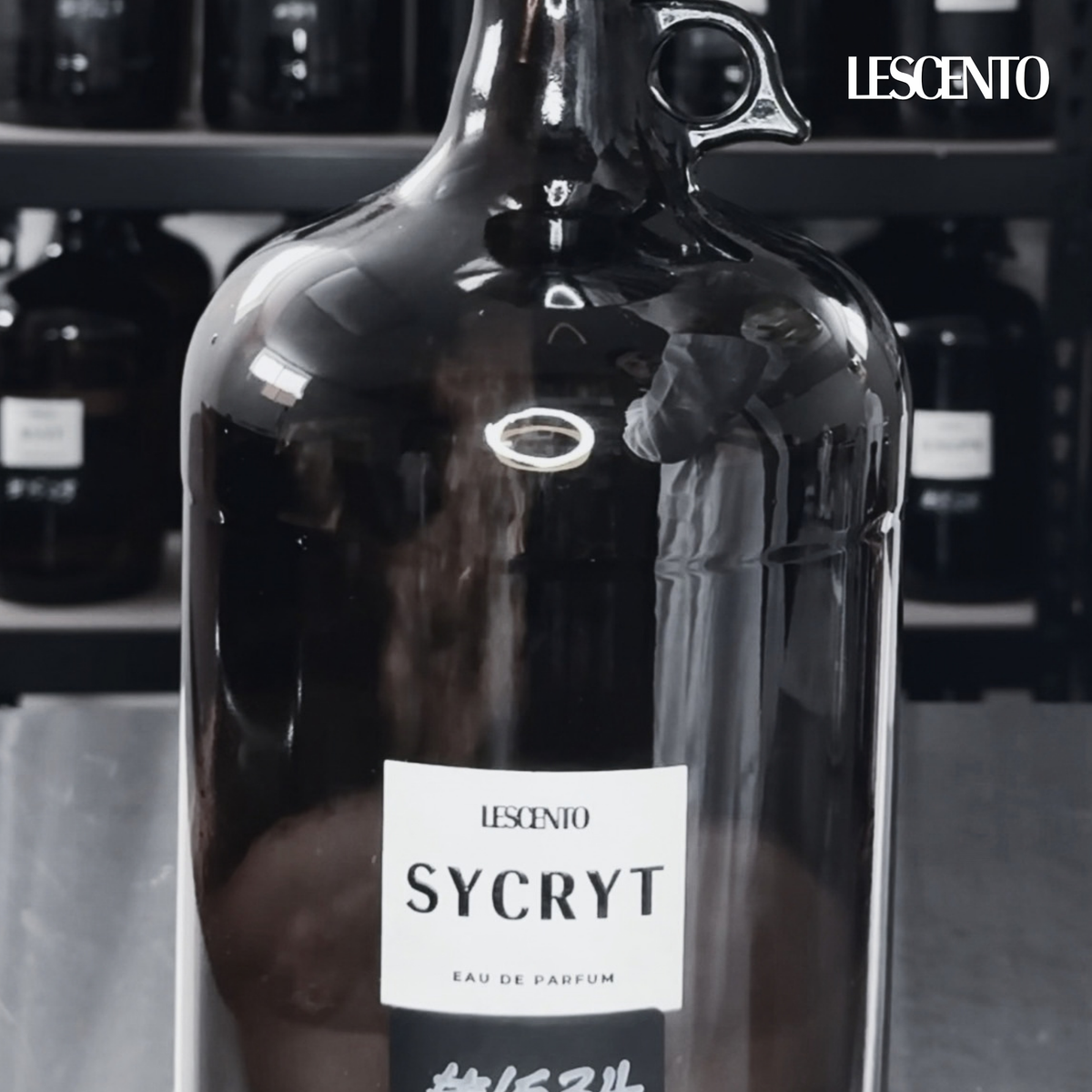
LESCENTO fragrances are given approximately six to eight weeks to macerate.
This period is important to our production philosophy.
Freshly blended perfume can sometimes feel more fragmented. Individual materials may appear more obvious and certain transitions can feel sharper. With time, the composition develops as a whole.
Edges can soften. Materials become better integrated. The fragrance begins to reveal the character that the formula was intended to express.
There is no shortcut that interests us here.
When a batch needs time, we give it time.
For a small perfume house, this has consequences. It means planning production well in advance. It means tying up inventory while fragrance is resting. And sometimes it means accepting that a fragrance may temporarily become unavailable rather than rushing another batch through production.
We consider that a worthwhile trade.
Why Small Batches Matter When Working With Natural Materials
Natural perfumery materials are not perfectly identical industrial objects.
A botanical ingredient comes from something that was grown.
Climate, geography, harvest conditions, extraction methods and the characteristics of the raw botanical material can contribute subtle differences between lots.
This does not mean that every bottle of a fragrance should smell different. Consistency matters, and a formula must maintain its identity.
But working in small batches allows us to stay attentive to the materials we are actually using rather than treating fragrance production as an entirely automated exercise.
That attention is part of craftsmanship.
We want BSSY to remain BSSY and ROSX to remain ROSX. But we also respect the fact that when genuine botanical materials form part of a formula, we are working with nature as well as chemistry.
The Beauty of Contrast
Many LESCENTO fragrances are built around contrast.
We find perfection less interesting than tension.
Freshness against depth. Floral against spice. Sweetness against dryness. Light against shadow.
In ROSX, Bulgarian rose meets cumin before moving through jasmine sambac, patchouli and cedarwood into vanilla absolute, benzoin and musk. Rose could easily have been treated as purely romantic and floral. The cumin changes the conversation.
PARADIS BRÛLÉ explores another kind of contrast. Black pepper and ginger introduce heat before guaiacwood, patchouli and vetiver lead toward vanilla absolute, sandalwood and amber. Vanilla is present, but it exists against smoke, spice and wood.
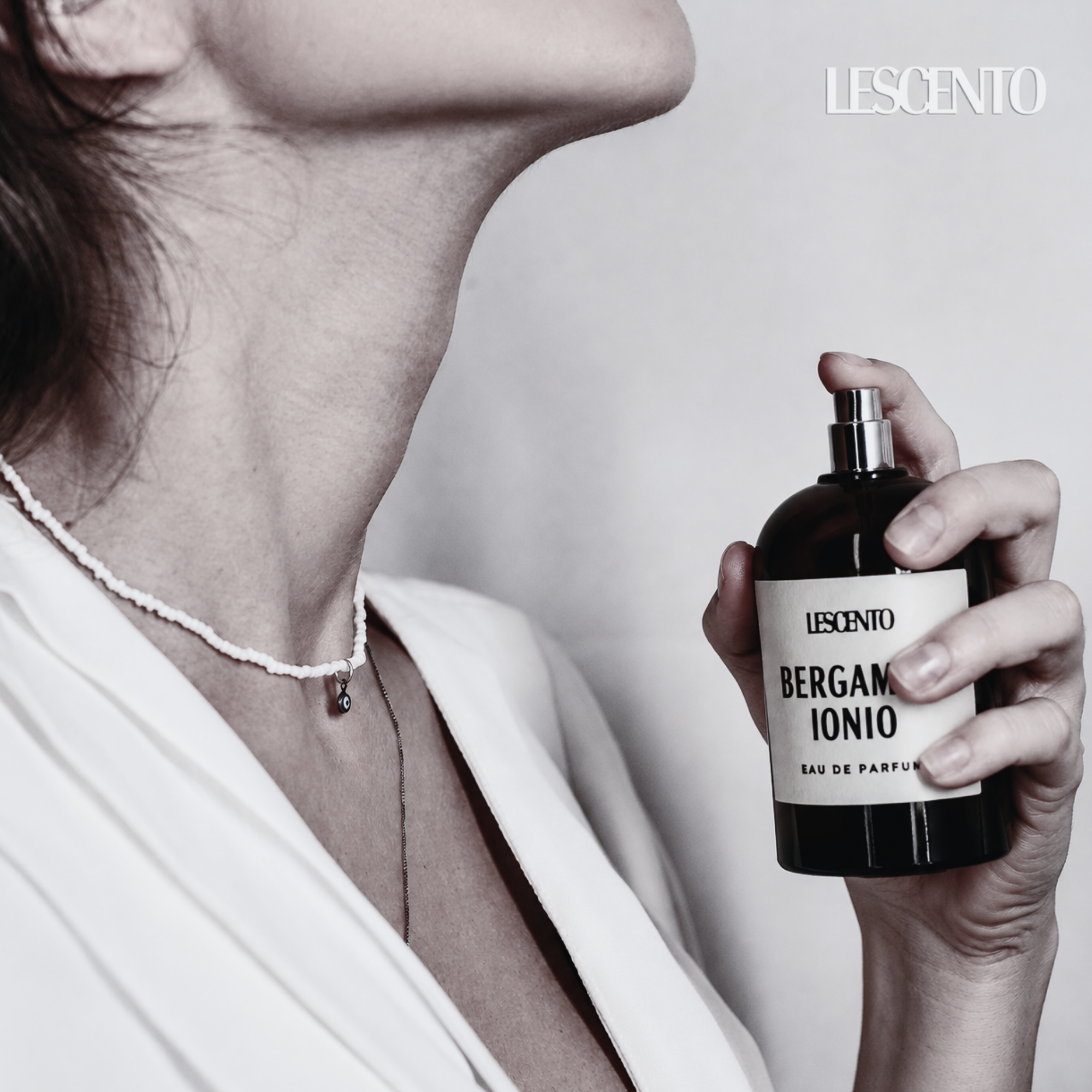
With BERGAMOT IONIO, Calabrian bergamot is not treated simply as a fleeting citrus opening. Its brightness is framed by green apple and black pepper, then contrasted with jasmine, cedarwood, Cashmeran, amberwood, vetiver and patchouli.
These relationships matter more to us than creating a fragrance around a checklist of fashionable notes.
Small Batch Does Not Mean Simple
There can be a misconception that small-batch products are somehow rustic or technically simple.
Fine perfumery is the opposite.
A formula may contain materials present in substantial amounts alongside others used in extremely small quantities. Some provide the recognizable character of the perfume. Others may never be consciously identified by the wearer but change its texture, diffusion or balance.
A perfumer may spend considerable time adjusting something that most people could never name.
That is part of the work.
You may never smell a particular material and think, there it is.
You may simply think the fragrance feels more complete.
That invisible architecture is often where craftsmanship is found.
From Concentrate to Finished Perfume
Creating the fragrance concentrate is only one stage of production.
The concentrate must become the finished Eau de Parfum. The composition is blended into its perfume medium according to the intended concentration and then allowed to develop.
After maceration, the fragrance must be evaluated and prepared for filling.
The perfume then moves into its final presentation: bottle, atomizer, label and packaging.
Each of these steps may seem small when considered independently.
Together, they determine what eventually reaches the person wearing the fragrance.
Small-batch production keeps us connected to those steps.
Why We Don't Rush a Sold-Out Batch
For an independent fragrance house, selling through a batch is exciting.
The obvious commercial response would be to replenish it as quickly as possible.
But perfume does not become ready simply because demand exists.
If the next batch needs to macerate, it macerates.
If materials need to arrive, we wait for them.
If something does not meet our expectations, we address it before the fragrance leaves us.
There are easier ways to operate a fragrance business, but protecting the product has to take priority over making every bottle continuously available.
Scarcity is not the objective.
Quality is.
Sometimes scarcity is simply a consequence of making things this way.
Made in Canada, With an Independent Point of View
LESCENTO is a Canadian niche fragrance house, and independence gives us the freedom to approach fragrance differently.
We do not have to design every composition to satisfy the broadest possible audience.
We can explore unexpected combinations.
We can allow a fragrance to be quieter when quietness suits it. We can make another richer, stranger, spicier or more textural. We can take an ingredient normally used in the background and move it forward.
Most importantly, we can remain curious.
That freedom is one of the reasons independent perfumery exists.
The Human Scale of Perfumery
There is also something inherently personal about producing perfume in smaller quantities.
When thousands upon thousands of units are moving through an industrial production system, the relationship between creator and finished bottle can become distant.
Small-batch production keeps that relationship closer.
We know what went into the fragrance.
We know why those materials were chosen.
We know how long the batch was given to develop.
And when the finished bottle leaves us, it represents something we were directly involved in creating rather than simply a product moving through a supply chain.
For us, that matters.
No Two People Will Experience It Exactly the Same Way
The final stage of a fragrance does not happen in our studio.
It happens on skin.
Perfume interacts with the wearer, temperature, environment and perception. One person may immediately notice the bergamot. Someone else may be captivated by the woods. Another may barely notice the opening and fall in love several hours later with the drydown.
Memory changes fragrance too.
Vanilla may remind one person of childhood and another of travel. Rose may feel familiar to someone and completely exotic to someone else. Smoke, leather, woods and spices carry their own associations.
That is why fragrance is unusually intimate.
We create the formula.
The wearer completes it.
Why LESCENTO Will Continue to Work in Small Batches
Small-batch production requires patience.
It requires more planning. It can mean waiting for materials, allowing inventory to rest during maceration and occasionally having less fragrance available than demand would ideally require.
But those limitations preserve something important.
Attention!
Attention to ingredients.
Attention to proportion.
Attention to maturation.
Attention to how a fragrance feels rather than simply how efficiently it can be produced.
We believe luxury is increasingly defined not by how much can be made, but by how much attention is given to what is made.
That is why LESCENTO produces fragrance in small batches.
Not to make less.
To pay attention to more.